
Shopify gives merchants more control over what shopping agents know
The Fall release makes product information and approved store policies a practical part of selling through AI channels.
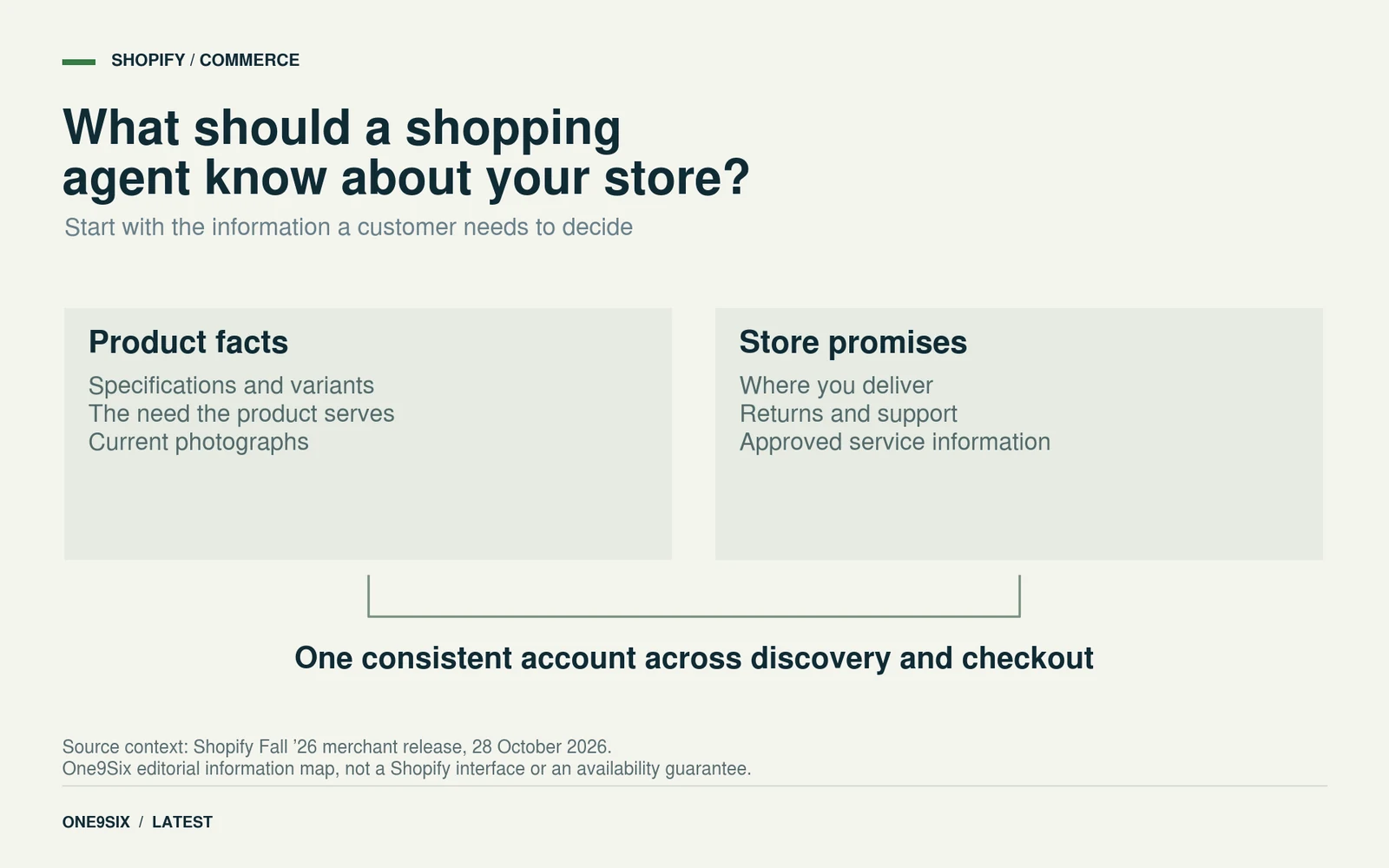
Shopify's 28 October Fall release adds a clearer view of Catalog eligibility and a knowledge base through which merchants review and publish store facts for shopping agents. The examples include returns, shipping destinations and gift services. Its developer release also expands structured access to catalog, cart and checkout functions. Other features in the edition have specific market or early-access conditions, so the announcement should not be read as identical availability for every store. [Sources]
This makes an old retail responsibility newly visible. A business needs to know what it sells, how the product differs, where it can deliver and what happens after the purchase. When those answers travel beyond the shop's own pages, inconsistencies can become harder for a customer to interpret.
The One9Six view
We would begin with the products that matter most commercially. Each should have a clear name, useful specifications, accurate variants, suitable photographs and a description of the need it serves. For a specialist product, the difference between two versions may matter more than another paragraph of promotional language.
The store's service promises need the same attention. Delivery areas, expected handling times, returns and support should be expressed consistently across the shop and any approved information supplied to other channels. The merchant remains responsible for deciding what it can promise. Drafting tools can help organise the material, but someone who knows the business needs to approve it.
We would then build a compact set of realistic shopping questions and test the resulting journey. Can someone identify the right size or application? Can they see an important limitation before buying? Does the cart preserve the intended variant and price? These checks should focus on decisions that can cause a lost order, an avoidable return or a support problem.
The brand still needs to explain why its offer deserves consideration. Accurate data gives discovery systems something dependable to work with; distinctive content gives the customer a reason to prefer the product. One9Six would connect those tasks through product storytelling, photography and a consistent commercial proposition.
The first deliverable should be a finished information pack for a priority product range, with approved store policies and a record of the channels checked. That is a practical investment the merchant can assess. Visibility or sales from an individual AI agent should then be measured as evidence becomes available.
Sources
- Shopify Fall 2026 merchant release ↗28 October 2026
- Shopify Fall 2026 developer release ↗28 October 2026
Sources checked 4 November 2026. News and research are attributed above; the application to clients is One9Six’s analysis.